
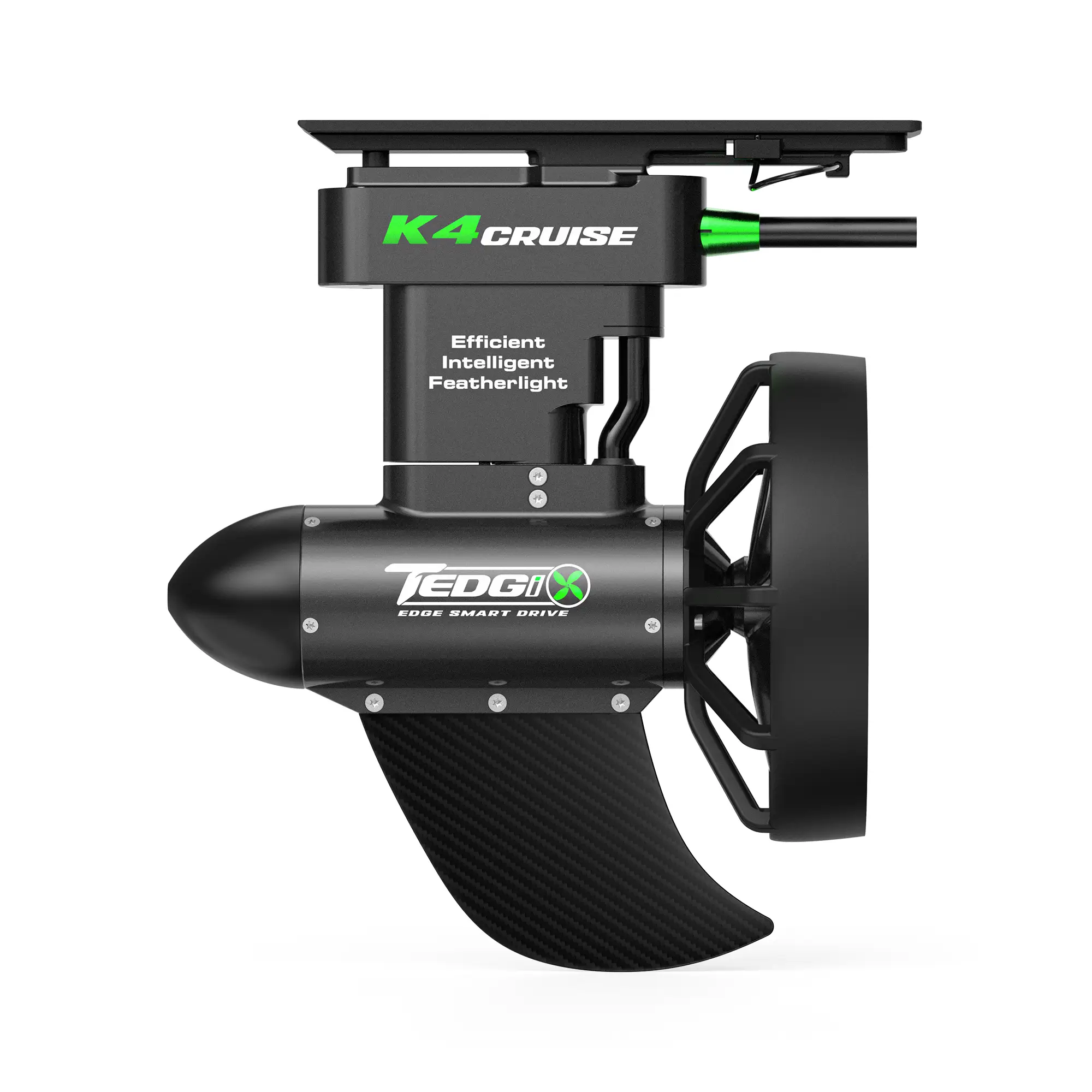
 K4C
K4C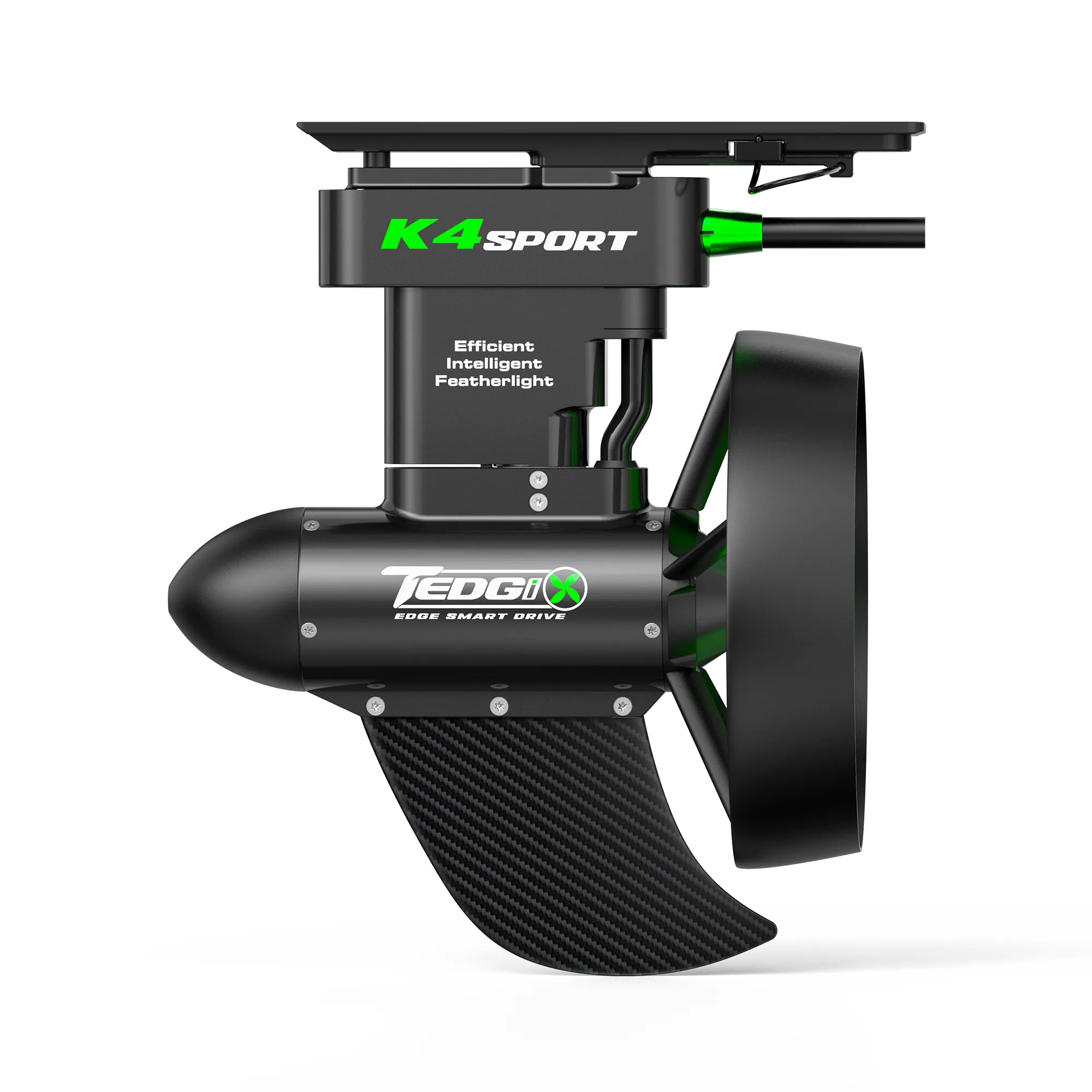 K4S
K4S K5
K5The Ultimate Kayak Trolling Motor Guide (2026 Edition)
Traditional kayak trolling motors are increasingly misaligned with how experienced kayak anglers and SUP users actually operate on the water. Heavy brackets, permanent mounts, and oversized batteries were once accepted compromises. In 2026, they are becoming liabilities.
Modern paddlers prioritize fast setup, zero hull modification, and minimal added mass. The expectation is no longer maximum thrust at any cost, but efficient propulsion that integrates cleanly with the hull and preserves original handling characteristics.
This guide reframes the evaluation of kayak trolling motors—not around raw specifications, but around installation philosophy, efficiency, and real-world usability.
Installation: The “No-Drill” Revolution
For experienced kayak anglers, installation is no longer a secondary consideration—it is foundational.
Traditional trolling motor setups typically involve:
-
Aftermarket brackets exceeding $100
-
Drilling into the hull or transom
-
Permanent hardware that adds drag and compromises resale value
These modifications introduce long-term risks, including water ingress, structural stress points, and reduced adaptability.
Slide-in installation as a system-level shift
Modern slide-in installation systems replace fixed brackets with standardized fin-box interfaces, a concept long established in performance watercraft.
Leading systems now ship as complete adaptation kits, with the required fin-box hardware included straight out of the box. This eliminates uncertainty around compatibility and avoids the need for piecemeal sourcing.
If a kayak has a flat bottom, a standardized fin box can be securely fitted using pre-engineered mounting solutions, achieving structural stability comparable to factory-installed hardware—without drilling.
The practical advantage is often overlooked: when the motor is removed, the kayak returns to its original lightweight, paddle-first configuration. This is something permanent mounts fundamentally cannot offer.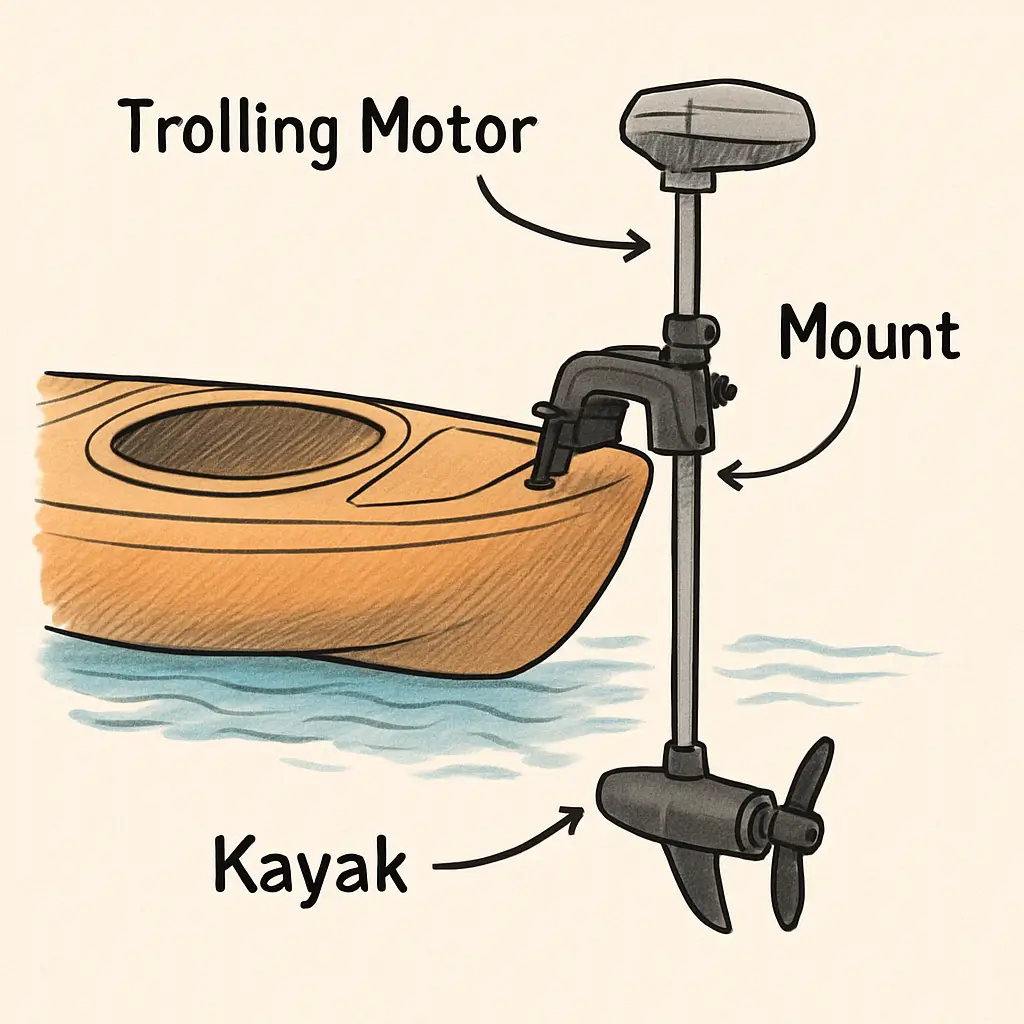
Power vs. Weight: Breaking the “55 lb Thrust” Myth
Many legacy buying guides still promote 55 lb thrust motors as a baseline for kayak fishing. While reassuring on paper, this recommendation often ignores system-level consequences.
A typical 55 lb thrust setup requires:
-
A large brushed motor
-
A 12V or 24V lead-acid battery
-
Total system weight approaching or exceeding 30 kg
For kayaks and SUPs, this mass dramatically alters trim, acceleration, and recovery in wind or current.
Why efficiency matters more than headline thrust
Modern 24V systems paired with high-efficiency brushless motors challenge the assumption that higher thrust automatically delivers better on-water performance.
When electrical efficiency, voltage, and propeller design are optimized:
-
Comparable cruising speeds can be achieved at a fraction of the weight
-
Energy losses from voltage sag—common in lead-acid battery systems—are significantly reduced
-
Smaller lithium batteries deliver more consistent output over the full discharge cycle
For anglers who spend extended time slow-trolling, tracking shorelines, or holding position, usable endurance and balance matter far more than peak thrust figures.
Smart Features: Auto-Steering & Remote Control
Fishing is rarely a hands-free activity. One hand is usually occupied, and often both are.
This is where many trolling motors—originally designed for small boats—fail to adapt to kayak-specific workflows.
Auto-Steering as a workload reducer
Auto-Steering is not about automation for its own sake. It is about reducing cognitive and physical load.
In wind or current, maintaining heading without constant correction allows anglers to:
-
Focus on rod control
-
Maintain consistent lure presentation
-
Avoid frequent micro-adjustments to the motor
Instead of steering becoming an active task, directional stability operates in the background. This distinction separates motors that are merely mounted on kayaks from systems designed around kayak fishing realities.
Remote control integration reinforces this advantage, allowing speed and heading adjustments without disrupting posture or balance.
Beyond fishing: modular versatility
An often-overlooked benefit of modular propulsion systems is their utility off the kayak. When removed, the same unit can operate independently as a compact underwater scooter—useful for shallow snorkeling, assisting kids near shore, or casual exploration during non-fishing trips.
This dual-use capability reframes the motor as a multi-purpose water mobility device, rather than a single-task fishing accessory, distributing its value across different activities and users.
Understanding Kayak Trolling Motors: Functional Role, Not Accessories
A kayak trolling motor is not an add-on; it is a propulsion system that must coexist with hull design, paddling mechanics, and fishing workflow.
When properly integrated, it:
-
Reduces fatigue during long sessions
-
Improves positional control in wind and current
-
Extends effective fishing range without overpowering the craft
The most effective systems are quiet, electrically efficient, and mechanically unobtrusive. Noise, vibration, and unnecessary drag directly affect fishing outcomes.
Types of Kayak Motor Mounts: Slide-in vs. Permanent
Mounting method determines long-term usability and ownership experience.
Slide-in systems
-
Tool-free installation and removal
-
No permanent hull modification
-
Cross-compatibility between kayaks or boards
-
Preserved resale value
Permanent mounts
-
High rigidity
-
Often heavier and kayak-specific
-
Require drilling and fixed hardware
-
Limit adaptability
For anglers who use their kayaks across seasons, locations, or disciplines, slide-in systems align better with real-world usage patterns.
The Slide-in System Explained: How It Works
At its core, the slide-in system relies on a standardized interface that allows the motor to lock into place securely while remaining fully removable.
Installation involves aligning the motor with the fin-box interface and sliding it into position. Removal is equally straightforward, enabling rapid transitions between paddling and powered operation.
Key characteristics include:
-
Predictable fit and alignment
-
Non-invasive installation
-
Easy transport and storage
This approach supports both experienced anglers and multi-use paddlers who value flexibility without compromising performance.
Why Slide-in Systems Beat Permanent Mounting in 2026
The growing preference for slide-in systems reflects changes in how kayaks are actually used.
Modern kayaks are:
-
Transported frequently
-
Stored in constrained spaces
-
Repurposed for fishing, touring, and recreation
Removable no longer implies unstable. Contemporary locking interfaces maintain alignment and load distribution even under continuous thrust, while preserving adaptability.
Key Features of 2026 Kayak Trolling Motors
Experienced users tend to converge on the same priorities:
-
Electrical efficiency for longer usable sessions
-
Low system weight to preserve handling
-
Auto-Steering to reduce workload while fishing
-
Slide-in installation for flexibility without compromise
Secondary features matter only when they meaningfully reduce friction on the water.
Choosing the Right Kayak Trolling Motor for Your Needs
Selection should begin with use case, not specifications.
Key considerations include:
-
Typical wind and current conditions
-
Session duration and fishing style
-
Total system weight relative to hull capacity
-
Whether the motor can be fully removed when not needed
For kayak anglers and SUP users, the ideal system enhances capability without fundamentally changing how the craft behaves.
Step-by-Step Guide: Installing a Slide-in Kayak Motor Mount
A true slide-in system does not require transom reinforcement or permanent structural modification.
Installation should be:
-
Reversible
-
Repeatable
-
Predictable
If drilling is required, the system is no longer modular—it is committed.
Essential Kayak Accessories for Trolling Motors
Accessories should support efficiency rather than add complexity. Battery management, wiring organization, and safety gear should integrate cleanly with the propulsion system, not work against it.
Maintenance Tips for Kayak Trolling Motors and Mounts
Routine rinsing, inspection, and battery care remain essential. Modular systems simplify maintenance by allowing components to be serviced independently of the kayak.
Slide-in System Use Cases: Fishing, Recreation, and More
For fishing:
-
Fine speed control
-
Directional stability
-
Quiet operation
For mixed use:
-
Rapid removal
-
Minimal added drag
-
Lightweight transport
Slide-in systems allow a single hull to support multiple roles without compromise.
Cost Comparison: Slide-in vs. Permanent Mounting
Upfront cost comparisons often overlook secondary expenses:
-
Brackets and reinforcement materials
-
Professional installation
-
Reduced resale value
Battery choice also affects ownership efficiency. Traditional lead-acid packs are motor-specific, while modern modular lithium systems can simultaneously power fish finders, GPS units, or campsite electronics—reducing the need to carry redundant batteries.
Future Trends: Innovations in Kayak Motors and Mounts for 2026
The trajectory is clear:
-
Smarter control rather than larger motors
-
Efficiency over raw thrust
-
Modular systems over permanent installations
Auto-Steering and slide-in installation are no longer emerging concepts—they are becoming baseline expectations.
Frequently Asked Questions About Kayak Trolling Motors
Experienced users tend to ask fewer “how” questions and more “why” questions. Understanding system-level tradeoffs leads to better long-term decisions.
Conclusion: Making the Smart Choice for Your Kayak
For experienced kayak anglers and SUP users, the question is no longer whether to motorize—but how cleanly and intelligently it can be done.
Slide-in systems with integrated Auto-Steering represent a shift toward propulsion that supports the craft, the angler, and the session—without permanently changing any of them.