
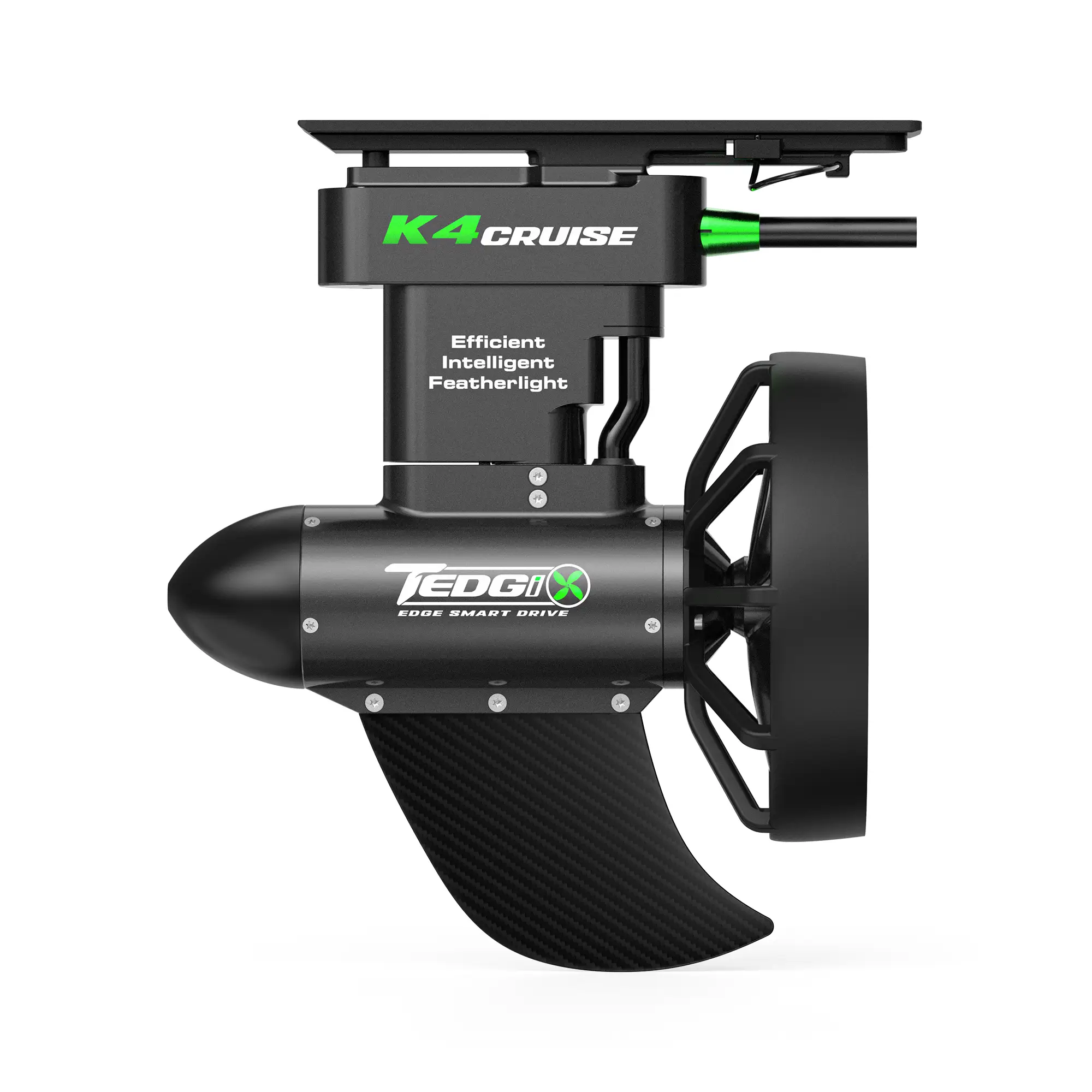
 K4C
K4C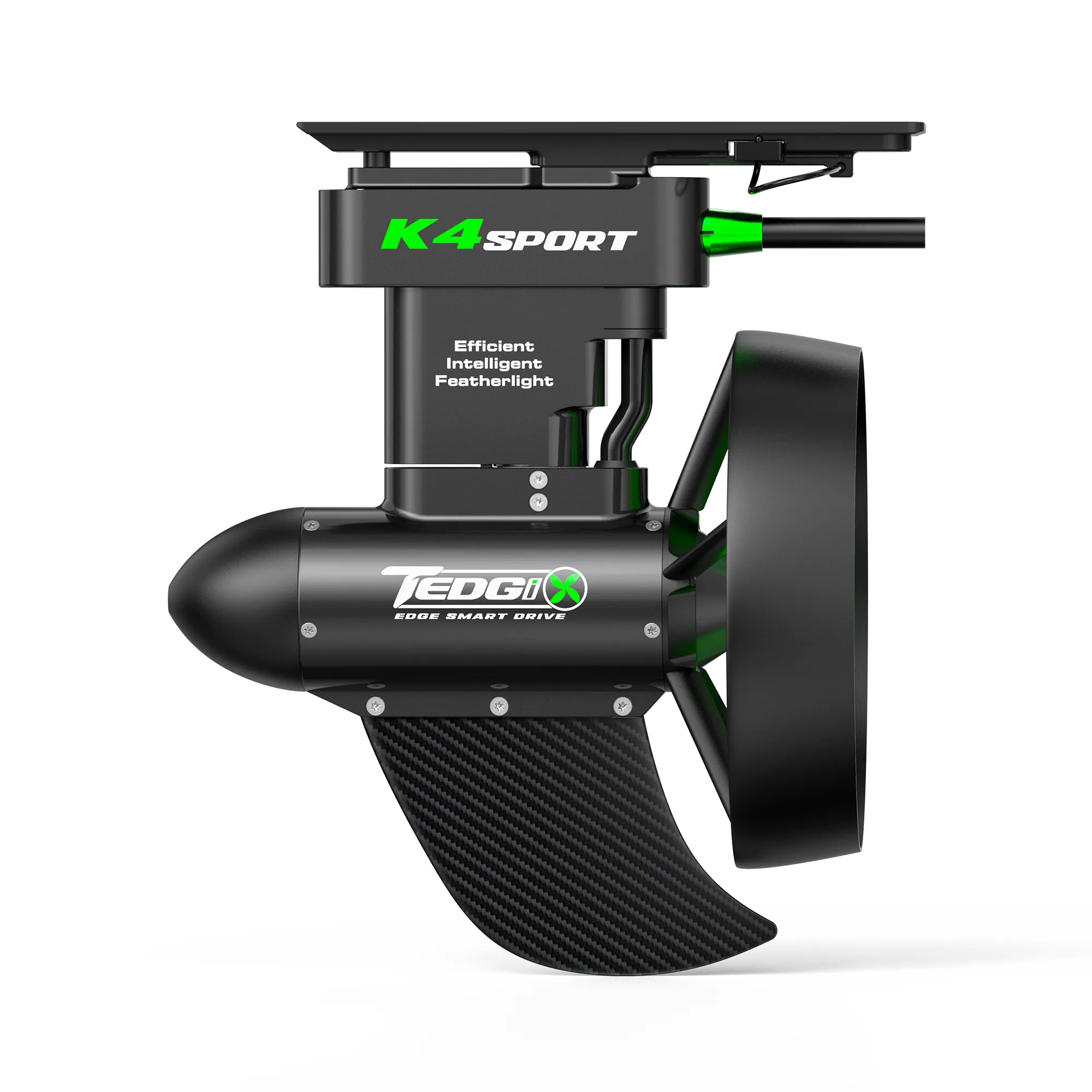 K4S
K4S K5
K5Beyond the Booth: 3 Trends from BOOT Düsseldorf 2026 That Are Changing Marine Mobility
Subtitle: Why “Power” Is Out and “Portability” Is In
Introduction From 17–25 January 2026, the global marine industry gathered at Messe Düsseldorf to set the agenda for the coming year. BOOT Düsseldorf has always been the ultimate scale indicator for water sports, but this year, the shift was not about horsepower, torque, or maximum thrust numbers.
It was about something quieter—mobility without complication.
Across multiple halls—whether in diving, paddlesports, or compact propulsion—the conversation had moved from “How powerful is it?” to “How easy is it to live with?”
From EDGE to Tedgix: A Name Built for the Future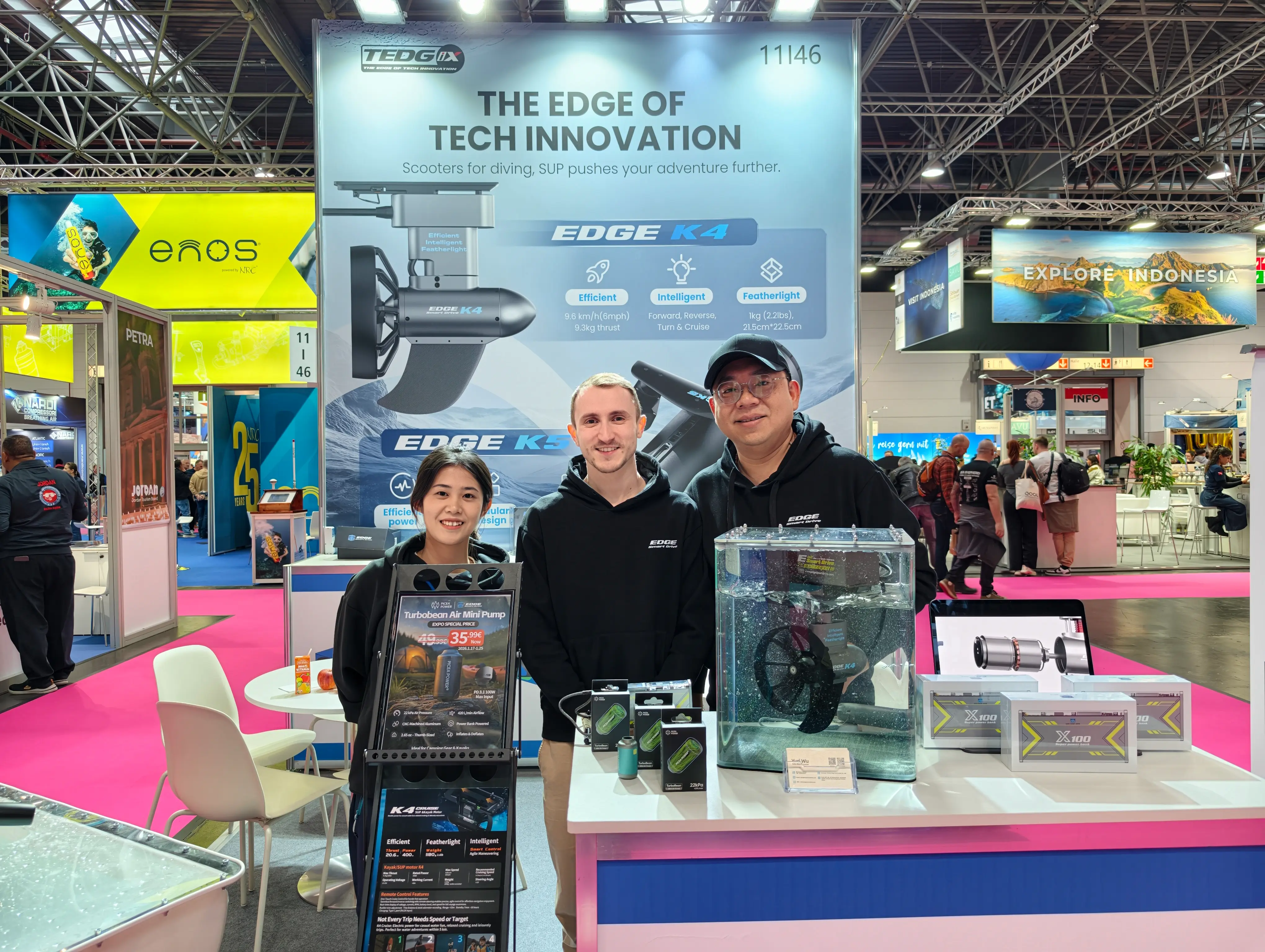
Before we dive into the trends we uncovered, we have an important update for our community. At BOOT 2026, we proudly unveiled our new global identity: Tedgix.
Long-time followers might know us as "EDGE"—which began as our internal project name during the early development and prototyping phases. As the product matured and prepared for this global release, it became clear that we needed a unique identity built for long-term growth.
Tedgix is now our official registered trademark, created to support global distribution and ensure a clear, protected brand identity in every market we enter.
What hasn’t changed is far more important: The product, the technology, and the team behind it remain exactly the same. Tedgix carries forward the same vision, engineering standards, and commitment to intelligent water propulsion—simply under a name designed for the future. (Note: This name change does not affect product specifications, warranties, or partner agreements.)
The Real Story Behind the Booths: Portability Wins
Welcome to the official blog of Edge Smart Drive, the exclusive online home of Tedgix marine gear.
After speaking with distributors, dive operators, and experienced users throughout the show week, one theme became clear: complex equipment is being filtered out of the market. Buyers are paying for stress-free mobility.
Lightweight. Install-free. Travel-ready.
Visitors to the Tedgix booth witnessed this evolution firsthand. Here are the three trends that are defining 2026.
Trend #1: The End of “Rigging Anxiety”
For years, entering kayak propulsion meant committing to modification. Drilling holes. Mounting brackets. Running external wiring. Reinforcing hull sections. For many potential buyers, that irreversible step was the barrier. Dealers at BOOT repeatedly described what they call “rigging anxiety”—customers hesitating at the idea of permanently altering a kayak they just invested in.
Why Drills Are Disappearing from Kayaks The 2026 buyer is rejecting permanent modification. They want propulsion that behaves like a USB device—insert, remove, repeat. This preference is not about convenience alone. It is about resale value, flexibility, and long-term ownership confidence. Products that require drilling are increasingly seen as legacy architecture.
The Solution: Slide-in & Go One of the most discussed installation concepts on the floor was fin-box integration—using standardized interfaces rather than custom brackets. The reaction to the Tedgix K4 installation system made this especially visible. Visitors studying the slide-in interface—many seeing it for the first time—were surprised by how little hardware was involved. No transom brackets. No external clamps. No hull modification.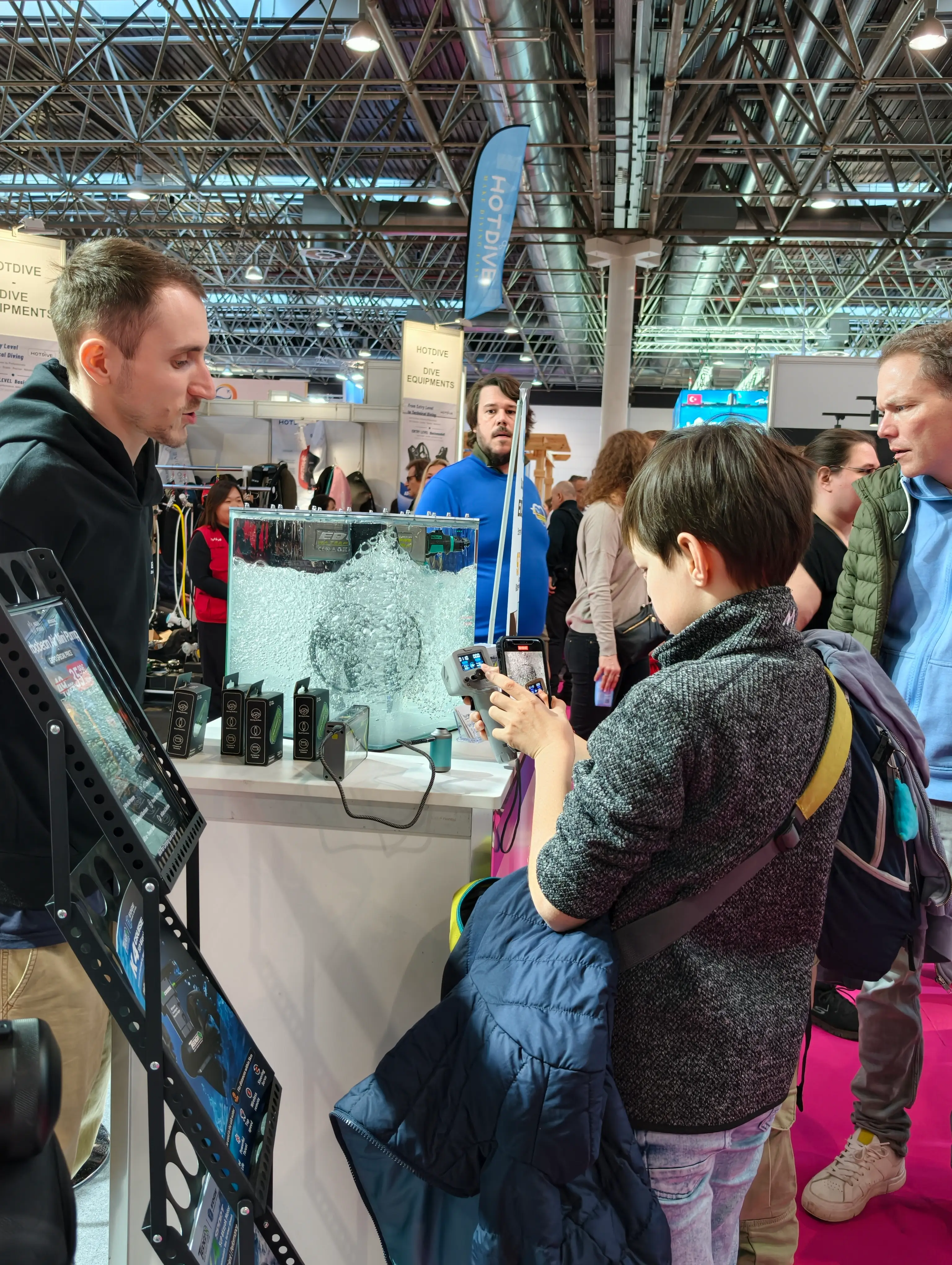
The K4’s Slide-in installation through a fin-box architecture eliminates drilling entirely, while maintaining secure propulsion alignment. Combined with its integrated Auto-Steering, it shifts the experience from “managing a motor” to simply moving on the water. The attention it drew was not because it was loud. It was because it removed friction. While fin-box integration has existed in other water sports for years, BOOT 2026 marked the first time it was clearly embraced as the new standard for kayak propulsion.
Trend #2: If It Can’t Fly, It Won’t Sell
The diving halls told a similar story. As international travel continues to normalize, divers are no longer content with renting underpowered scooters at destination resorts. They want to bring their own equipment—gear they trust. But air travel imposes a non-negotiable constraint.
The “Carry-On” Demand from Global Divers Multiple dive retailers at BOOT confirmed the same shift: If a propulsion system cannot travel easily, it struggles to justify its premium positioning. Battery weight, pack size, and airline restrictions are no longer side considerations—they are central purchasing criteria.
Airline Compliance (<100Wh) as the New Gold Standard The threshold is clear. Systems designed with airline-compliant (<100Wh) battery modules are becoming the new benchmark for global divers. Products exceeding this limit immediately lose portability in half their use cases.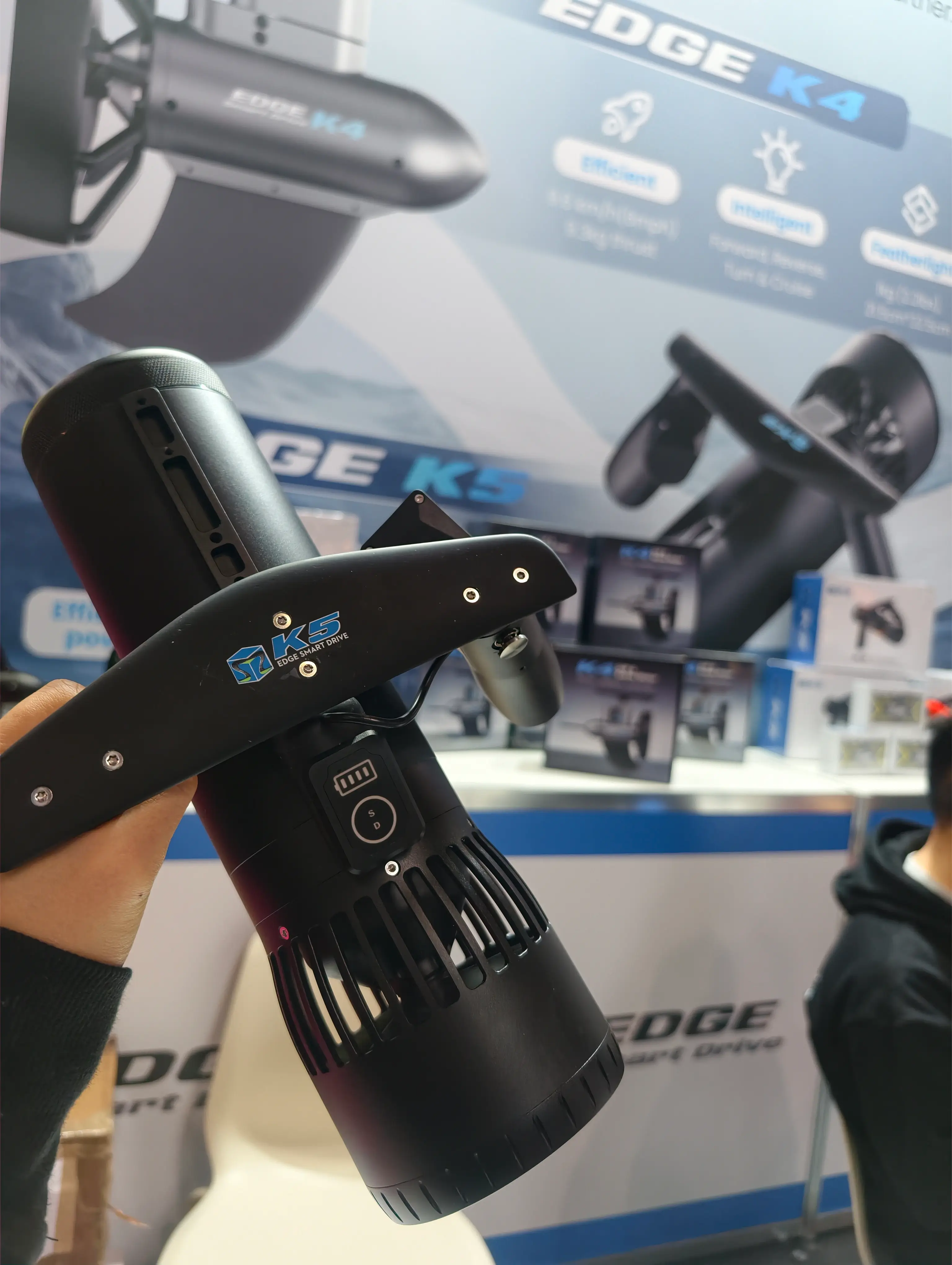
The modular architecture of the Tedgix K5 reflects this shift. By using swappable, airline-compliant battery modules, it allows divers to carry propulsion legally in hand luggage—transforming the scooter from “local toy” into “global equipment.” At BOOT 2026, portability was not framed as a bonus feature. It was treated as an entry requirement for high-end dive propulsion.
Trend #3: Silence Is the New Speed
In the paddlesports and angling segments, the conversation around performance has matured. Speed is no longer the headline metric. Control and stealth are.
Stealth Over Horsepower (The Angler’s Perspective) Anglers visiting propulsion stands asked fewer questions about top speed and more about approach noise. The practical insight is simple: A fish cannot hear your thrust rating—but it can detect vibration and acoustic disturbance.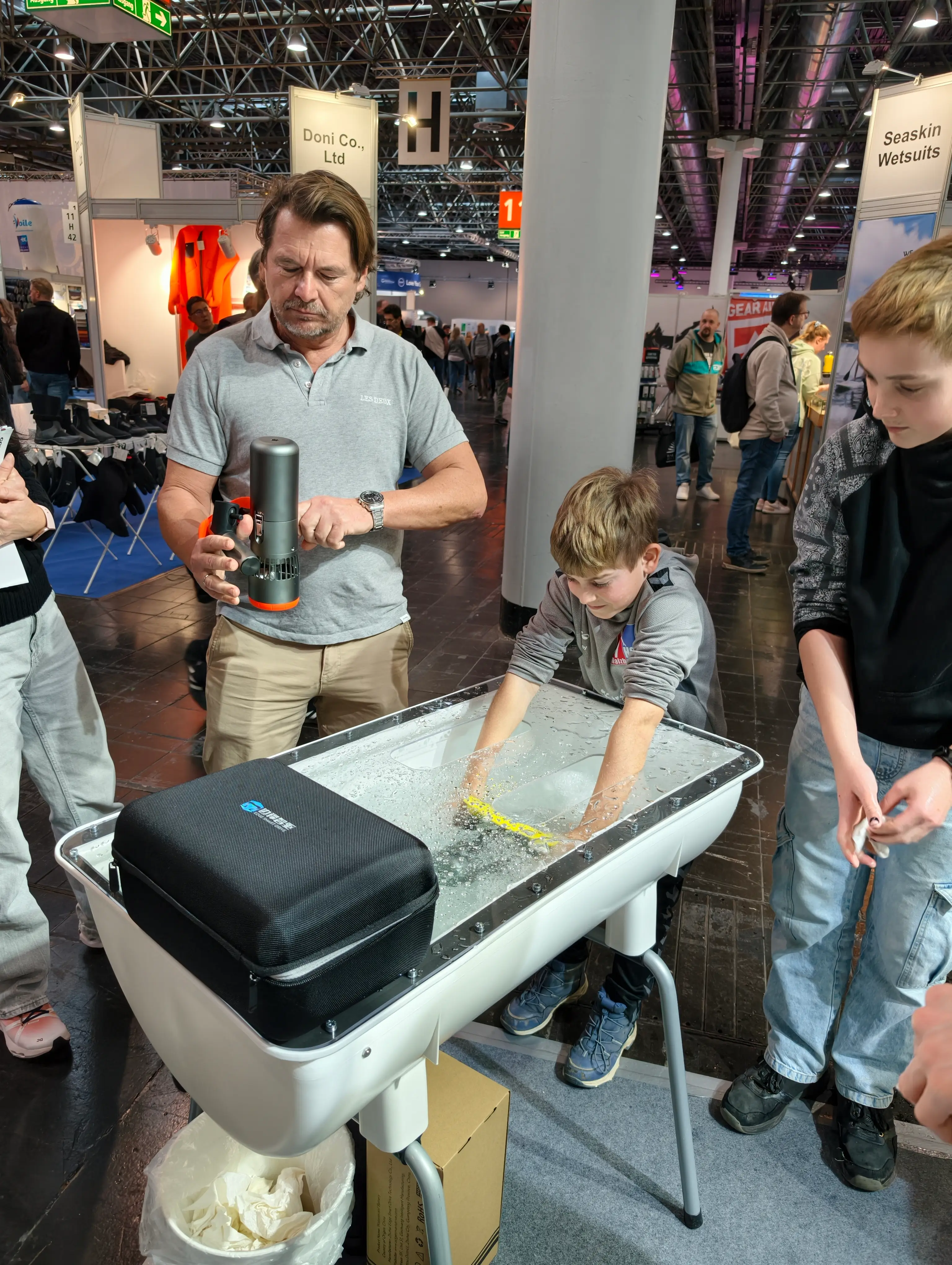
Systems built around direct-drive motor architecture, rather than gear-driven systems, demonstrated noticeably quieter operation during on-floor testing and demos. For kayak anglers, the value of propulsion lies in closing distance without disruption. This is where the Tedgix K4 aligns with the broader shift observed at the show. Its lightweight form factor, integrated control system, and Auto-Steering stability emphasize positioning precision and quiet tracking—not peak velocity. The industry conversation has moved from “How fast can it go?” to “How quietly can it approach?”
A Broader Pattern: Portability Over Permanence
Across underwater scooters, kayak motors, and compact propulsion systems, BOOT Düsseldorf 2026 signaled a consistent transition:
-
From heavy rigging to modular integration
-
From permanent installation to reversible systems
-
From peak power to usable power
-
From bulk to carry-on compatibility
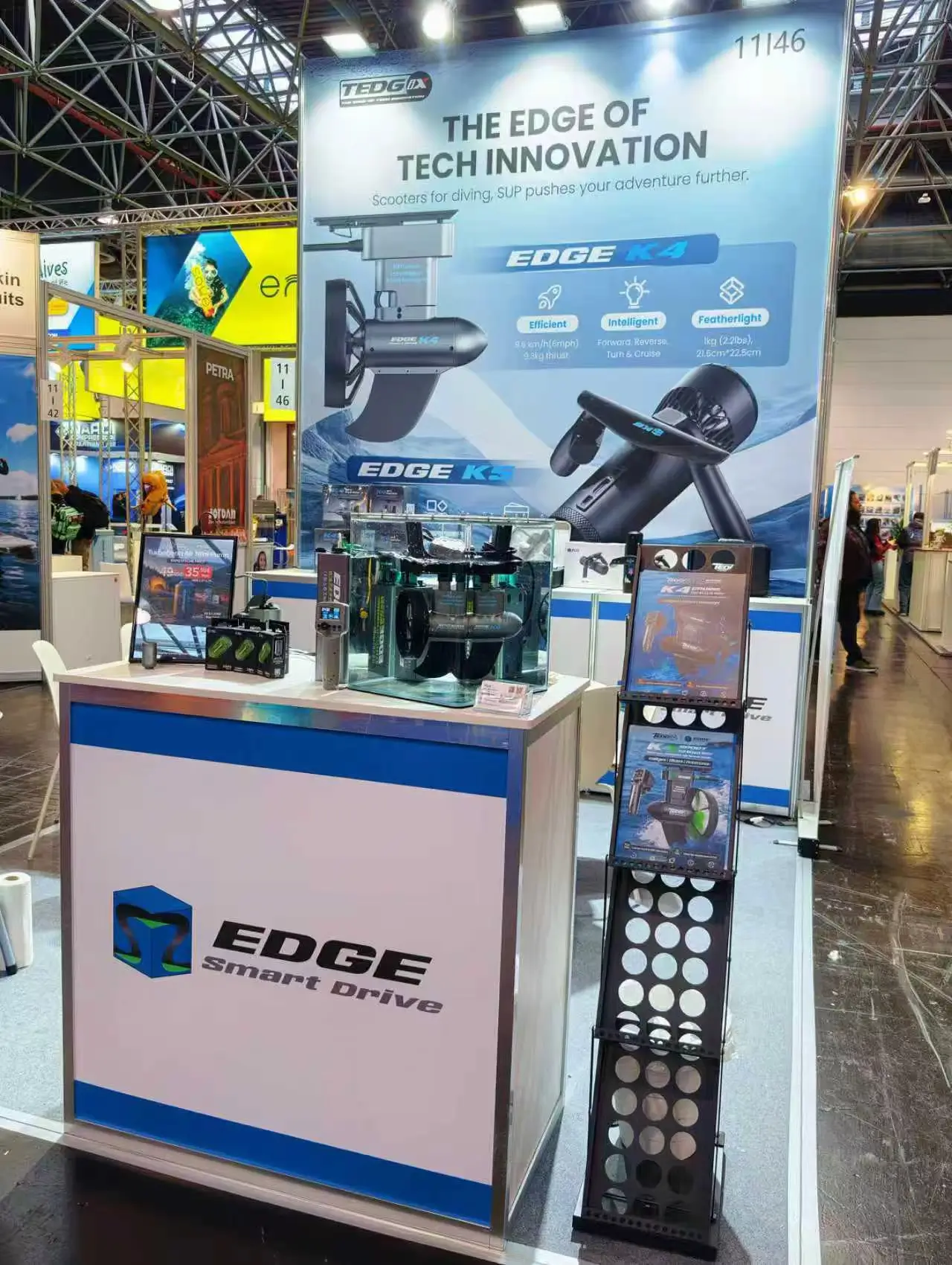
Battery density improvements and material engineering have finally made compact sub-5 kg propulsion systems commercially viable. This was not a message delivered by one brand; it was visible across categories.
Tedgix did not create the shift toward portability—but we are clearly positioned at the leading edge of it.
Conclusion: Don’t Get Left on the Dock
Lightweight. Install-free. Airline-ready. These are no longer future-facing concepts. They are present-tense standards. BOOT Düsseldorf 2026 did not revolve around bigger motors. It revolved around smarter mobility—systems that remove friction from ownership and travel.
The global market is pivoting toward modular portability.
Experience the new Tedgix lineup. Available exclusively at