 K4C
K4C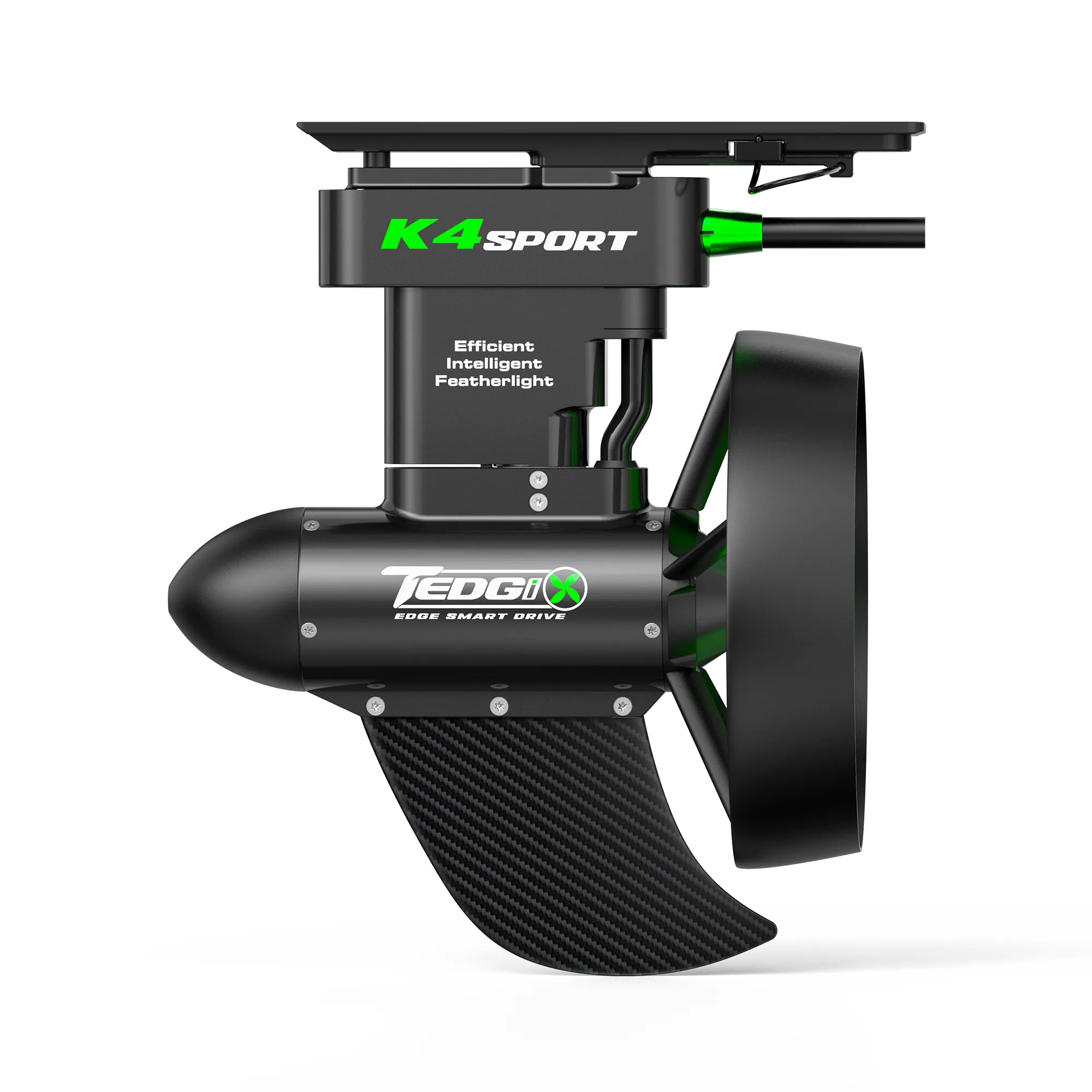 K4S
K4S K5
K5Inboard Outboard Motor vs Outboard: The Ultimate Comparison & The Rise of the “Third Choice”
Choosing the right motor for your boat isn’t just about horsepower. It affects handling, maintenance complexity, onboard space, safety requirements, and long-term cost of ownership.
For decades, most owners have debated two main options:
-
Inboard / Sterndrive (inboard-outboard) systems installed inside the hull and connected through a drive
-
Outboard motors mounted externally on the transom
But in 2026, the conversation is widening. A “third choice” is emerging—not just electric outboards and hybrid pods, but also lightweight, modular electric propulsion for smaller watercraft that don’t need (or want) a full gas engine.
This guide breaks down the inboard outboard motor vs outboard decision, then explains when and why the “third choice” makes sense—especially if you care about simplicity, noise reduction, and modular upgrades.
Understanding Marine Propulsion: Inboard vs Outboard Motors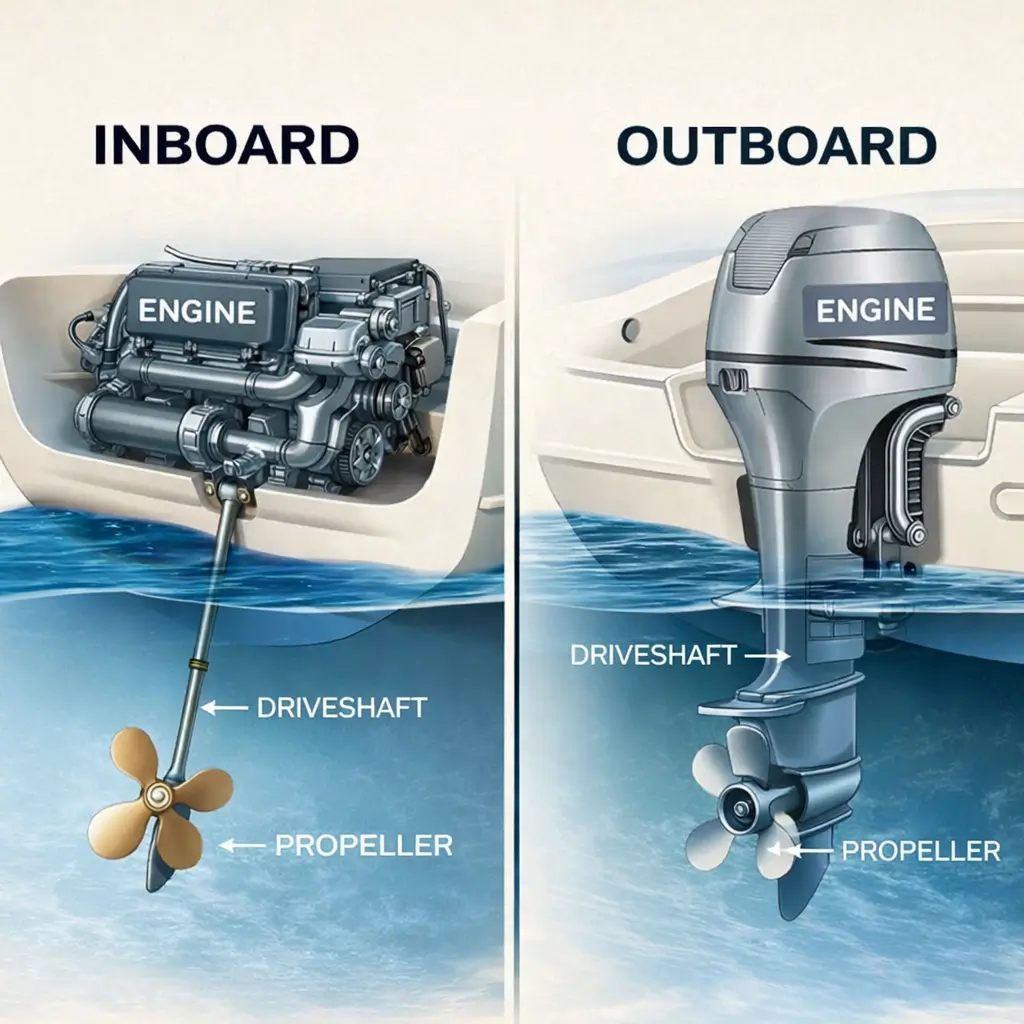
Marine propulsion is the system that converts engine power into thrust and steering control. The two dominant categories—inboard/sterndrive and outboard—solve different problems.
Inboard / Sterndrive (Inboard-Outboard) Basics
Inboard and sterndrive engines sit inside the hull. They deliver power through a drive system and propeller. This design often provides a lower center of gravity, which can improve stability and ride feel in certain conditions.
Outboard Basics
Outboards mount on the transom, combining engine, gearcase, and prop in one external unit. They’re popular because they’re easier to access, easier to swap, and free up interior space.
When comparing these systems, you’re usually choosing between:
-
Space and layout requirements
-
Service access and maintenance cost
-
Performance and handling style
-
Upfront and long-term ownership cost
-
Safety and ventilation considerations (especially for gasoline inboards)
Inboard Motors: Features, Pros, and Cons
Inboards (and many sterndrive variants) remain common on larger boats and certain performance categories.
Pros
-
Balance & ride feel: Lower weight placement can improve stability
-
Quieter perception: Engine noise may be less exposed than an outboard sitting outside the hull
-
Power delivery: Often paired with boats designed around the drivetrain
Cons
-
Maintenance complexity: Access can be more involved
-
Cost: Installation and service can be higher
-
Ventilation & safety requirements: Enclosed gasoline engine compartments often require powered ventilation systems and proper design to reduce vapor risks (ABYC guidance references USCG ventilation rules).
Practical note: if you’re shopping used boats, inboard condition and maintenance history matter a lot because major service work is typically more labor-intensive than on outboards.
Outboard Motors: Features, Pros, and Cons
Outboards dominate many segments because they simplify ownership.
Pros
Service access: Easy to reach, easy to inspect
Upgrade path: Repower is straightforward compared to internal drivetrains
seasonal maintenance burden
Shallow-water utility: Many can tilt clear of the waterCons
Noise exposure: Engine is outside the hull, closer to the user
Rough-water feel: Some hull/weight distributions may feel different vs inboards
Space on transom: Takes exterior space and can affect rigging layouts
Key Differences: Inboard Outboard Motor vs Outboard (Quick Comparison)
Category Inboard / Sterndrive Outboard Installation Inside hull, drivetrain through transom External on transom Service access Usually harder Usually easier Interior space Reduced (engine occupies hull volume) More interior space Safety/ventilation Gasoline compartments often require ventilation design considerations Less compartment vapor management inside hull Repower/upgrade More complex Easier Typical buyer Larger boats, certain performance categories Broad recreational segments
Power & Performance: Which Suits Your Needs?
Instead of starting with “inboard vs outboard,” start with how you actually boat:
Watersports / towing: Many setups value torque delivery and predictable handling
Fishing / coastal cruising: Owners often prioritize reliability, service access, and deck space
Shallow rivers / flats: Tilt and maneuverability can matter more than raw power
Market data also reflects how widely outboards are used across recreational categories (e.g., new boat sales mix).
Industry data also reflects how usage patterns influence propulsion choice.
According to the National Marine Manufacturers Association (NMMA), the majority of recreational boating activity in North America occurs on smaller boats used for fishing, day cruising, and short-distance trips—segments where simplicity, ease of maintenance, and operating cost matter more than raw horsepower.
Maintenance, Cost & Longevity
Outboards generally win on service accessibility and repower simplicity.
Inboards/sterndrives can be durable, but the real-world cost depends heavily on installation quality and maintenance history.Two reminders that affect ownership cost:
Access drives labor hours (especially for inboard compartments)
Safety requirements are part of ownership, not optional—ventilation design and standards exist for a reason.
Safety, Handling & Environmental Considerations
Safety
Gasoline engine compartments are a known design and maintenance focus area; ABYC’s ventilation standard explicitly ties into USCG requirements for expelling/diluting gasoline vapor.
Environmental direction
Marine engines sold into various markets must comply with emissions frameworks and regulations. In the U.S., EPA provides guidance on how marine engine regulations apply.
The Rise of the “Third Choice”: Electric, Hybrid, Pod Drives… and Modular Electric Assist
Most people interpret the “third choice” as electric outboards, hybrid systems, or pod drives.
1) Pod Drives (High-end third choice)
Pod systems can improve maneuverability and efficiency in certain boat designs. For example, Volvo Penta positions IPS as offering strong control and claims up to 30% fuel reduction in some applications.
2) Electric & Hybrid Systems (Mainstream third choice)
Electric and hybrid setups are gaining visibility as owners prioritize lower noise, reduced emissions, and simpler control—especially in protected waters and regulated areas. Regulatory pressure and emissions compliance frameworks continue to shape adoption.
3) Modular Electric Assist (The overlooked third choice for small watercraft)
Here’s the piece most “inboard outboard motor vs outboard” articles miss:
Not everyone needs—or wants—a full gasoline engine.
If your “boat” is actually a kayak, SUP, small inflatable, or lightweight tender, the best third choice often isn’t an electric outboard. It’s a lightweight, removable electric assist that adds thrust and steering control without drilling, rigging a transom, or permanently modifying your craft.
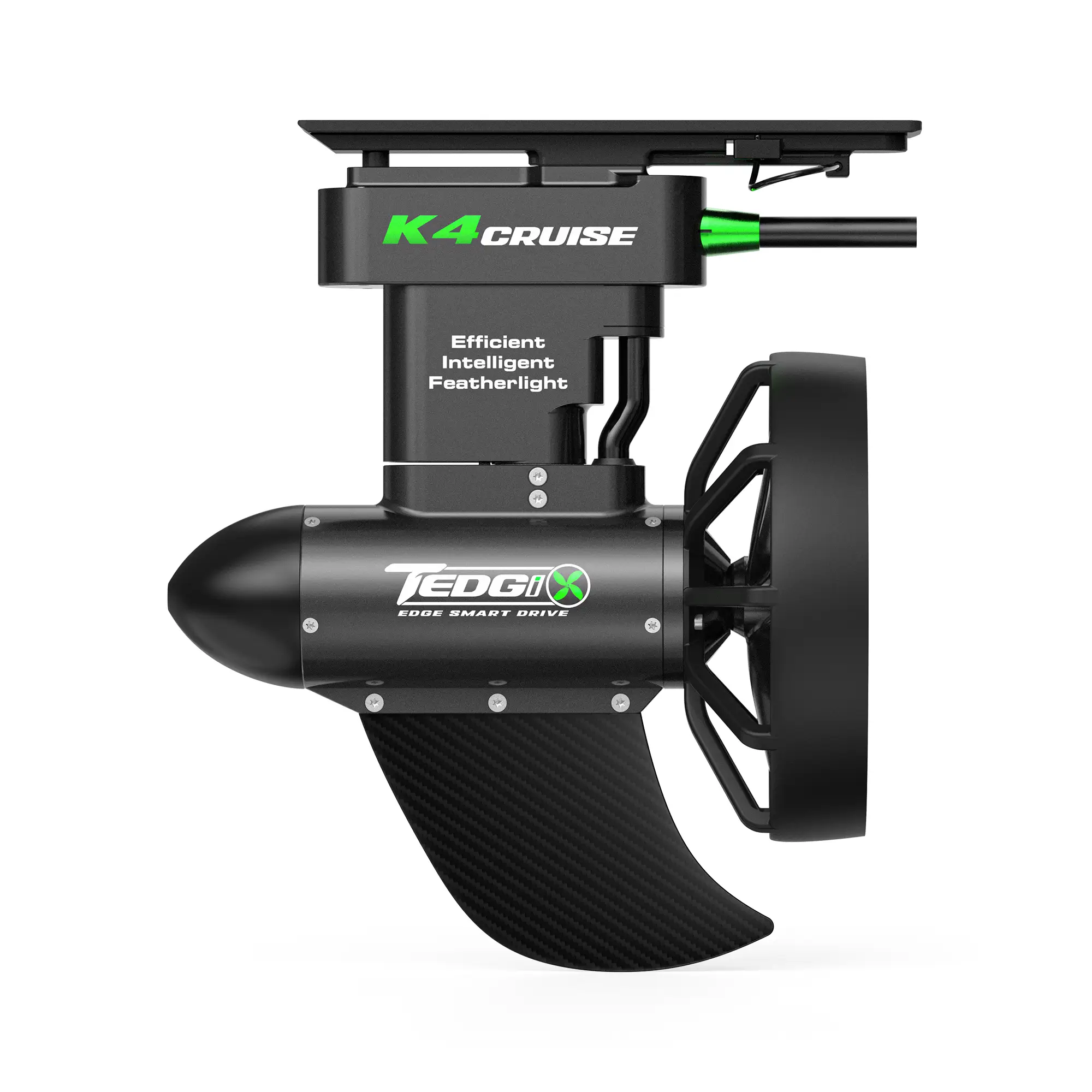
A practical example is the Tedgix(EDGE) K4 electric fin:
400W brushless motor with 9.3 kg / 20 lbs thrust
Top speed 9.6 km/h (6 mph)
Lightweight ~1000g (excluding cables)
Wireless remote control + cruise control
Auto-Steering via steering servo with ±35° steering range
Slide-in installation: fits standard fin boxes using a quick-release base—no drilling
Battery options span travel to long-range use, including an airline-safe 98Wh option and larger packs up to 820Wh
What this means in real life:
If your use case is fishing, exploration, or short-range commuting on a kayak/SUP, a fin-based electric assist becomes a “third choice” that sidesteps the entire inboard vs outboard dilemma, because you’re not installing a traditional marine engine at all—you’re upgrading propulsion modularly.
When the “Third Choice” Makes Sense
Use this decision filter:
Choose Inboard/Sterndrive if you…
Run a larger boat where integrated drivetrain design matters
Prioritize certain ride characteristics and boat layouts
Are comfortable with more complex service access and compartment standards
Choose Outboard if you…
Want simpler maintenance access and repower flexibility
Navigate shallow water regularly
Want more interior space and straightforward engine swaps
Choose Modular Electric Assist (like K4) if you…
Operate kayaks, SUPs, inflatables, or lightweight tenders
Want quiet propulsion and reduced fatigue
Want Auto-Steering + Slide-in installation with no drilling
Prefer a portable upgrade path rather than a permanent engine
If that matches your profile, start here: Tedgix(Edge) K4 slide-in electric fin system
Conclusion: Beyond Inboard Outboard Motor vs Outboard
The classic inboard outboard motor vs outboard debate still matters for many boat owners.
But in 2026, “the best choice” increasingly depends on whether you actually need a traditional marine engine at all.
For larger boats, the third choice may be pods, electric outboards, or hybrids.
For small watercraft, the third choice is often modular electric assist—portable, drill-free, and optimized for control.
If your priorities are ease, quiet control, and lightweight upgrades, the “third choice” might not be a new engine—it might be a smarter way to power the platform you already own.